Historic Cleveland plant set for renovation
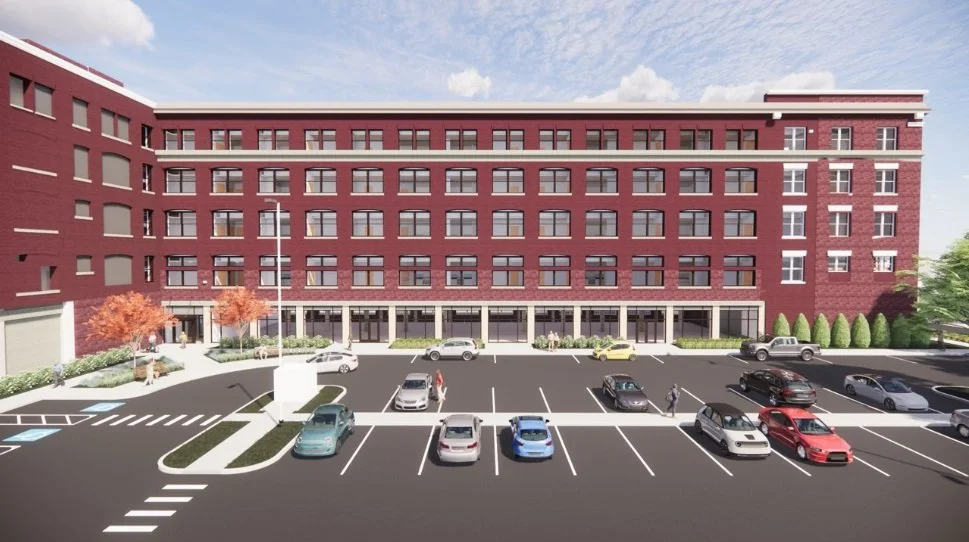
An artist rendering of the $64 million Warner and Swasey buildings, which will create about 180 jobs for affiliated members of the Cleveland Building Trades.
A historic manufacturing plant that has sat vacant in Cleveland for four decades is finally set for a new life. The project developers were joined by a broad coalition of public and private stakeholders on June 2 to celebrate the official groundbreaking of the Warner & Swasey redevelopment project.
While sitework has been ongoing since winter, the ceremony officially launched construction on the long-awaited adaptive reuse of the historic part of Cleveland’s Midtown neighborhood.
The $64 million rehabilitation, led by Philadelphia-based developer Pennrose LLC and local nonprofit MidTown Cleveland Inc., is being carried out by John G. Johnson Construction of Cleveland.
The project will create jobs for about 180 affiliated members of the Cleveland Building and Construction Trades Council.
The comprehensive rehabilitation will transform the 115-year-old, 194,000-square-foot, five-story building into a vibrant mixed-use, mixed-income community.
Upon completion, the project will deliver 112 rental apartments in its first phase, followed by approximately 28 additional residential units and 22,000 square feet of commercial space in a second phase.
Phase one will include the renovation of two 56-unit buildings, one for seniors and one for families. Phase two will add 28 housing units with integrated commercial space.
The development team plans to preserve and incorporate the building’s unique architectural features into amenity spaces, including a second-floor rooftop terrace and outdoor gathering spaces.
The redevelopment will include apartments for individuals, seniors, and families, with affordable housing for households earning between 30 percent and 60 percent of the area median income. Additional units are being considered for possible later phases.
According to the Encyclopedia of Cleveland History, the Warner & Swasey Co. was once a leading manufacturer of machine tools, with a worldwide reputation for its telescopes and precision instruments.
Founded in Chicago, the company moved to Cleveland in August 1881.
The company gained international fame in 1886 by building the largest telescope at the time for the Lick Observatory in California and later completed large telescopes for the U.S. Naval Observatory and the Yerkes Observatory in Wisconsin.
While the company used its powerful astronomical observation instruments to gain publicity, most of its profit came from machine tools.
By the turn of the century, the company placed more emphasis on its profitable turret lathe business. During World War II, the company employed 7,000 people and produced half of the turret lathes manufactured in the U.S.
After the war, it diversified into textile machinery, construction equipment and the electronics industry through internal growth and acquisitions.
After multiple acquisitions and a downturn in business, the site at 5701 Carnegie Ave. closed and then sat vacant for 41 years.
Time and weather were not kind to the structure, which has significantly deteriorated over the years.
“It is certainly one of the worst buildings I have ever seen,” CBCTC Executive Secretary/Business Manager Dave Wondolowski said.
The building’s severely dilapidated condition poses additional safety hazards to those working on the project, particularly the tradesmen and tradeswomen who will perform the demolition work, Wondolowski added.
As they safely begin to demo and revive the buildings, affiliated CBCTC members will help further connect downtown Cleveland to University Circle.
The project is now a reality thanks in part to a complex financing plan.
The development team drew on 24 capital sources to bring the project to fruition, including contributions from the City of Cleveland, Cuyahoga County and the Cleveland Foundation, among other public and private partners.
The Ohio Housing Finance Agency awarded the project Low-Income Housing Tax Credits, which were syndicated by Hunt Capital Partners. State and federal Historic Tax Credits were also awarded to the project. Huntington National Bank provided construction and permanent
debt financing. The Port of Cleveland provided capital lease financing.
“Many Clevelanders have a deep, personal connection to this building, this site, and this neighborhood,” said Pennrose Regional Vice President Geoff Milz. “That shared history made
the case for redevelopment incredibly compelling, and it’s what kept our team motivated through years of complex work to get here.”
Ashley Shaw, Executive Director of MidTown Cleveland, said the groundbreaking represents nearly a decade of collaboration.
“Warner & Swasey has long stood as a symbol of this neighborhood’s industrial legacy,” she said. “Today, we are not only preserving an important historic landmark, but creating new opportunities for residents, families, and businesses to thrive in the heart of Cleveland.”
Cleveland Mayor Justin Bibb said the project represents the largest affordable housing investment by the City of Cleveland at $12 million.
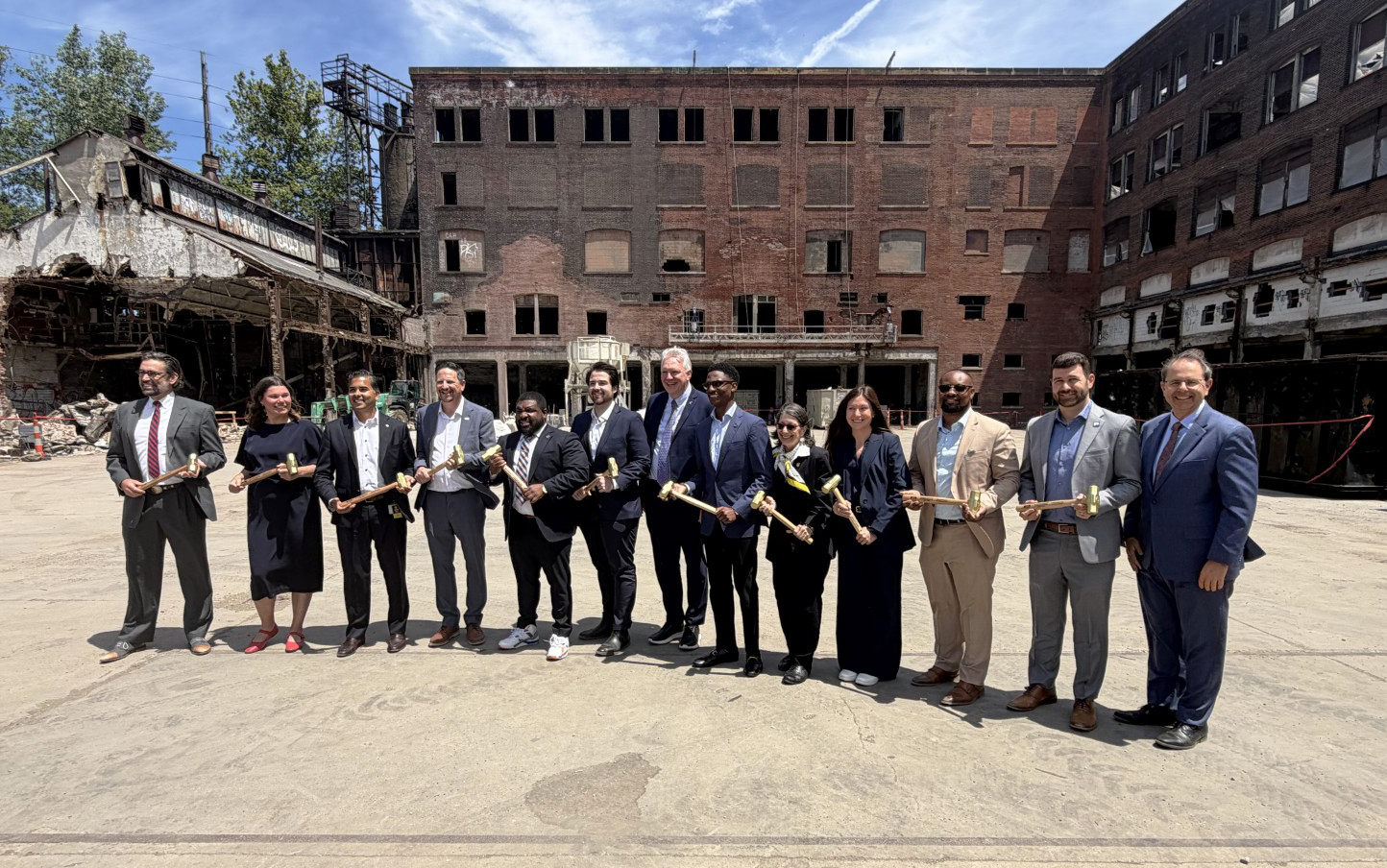
Elected officials and project leaders at the official groundbreaking ceremony for the Warner and Swasey project in Cleveland’s Midtown neighborhood.
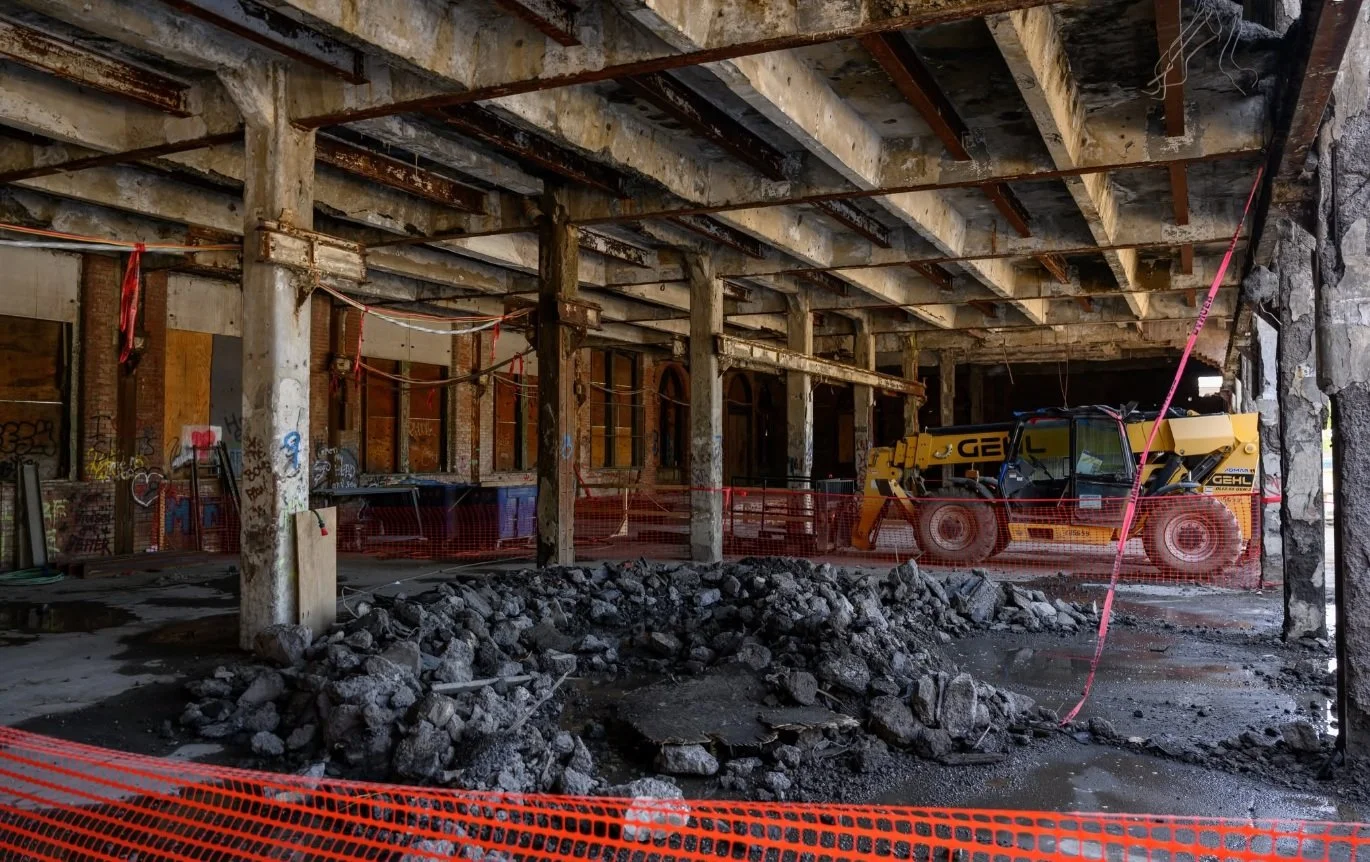
Having sat vacant for over 41 years, the former Warner & Swasey building, located at 5701 Carnegie Ave., has significantly deteriorated. The poor condition of the buildings will pose a challenge for affiliated members of the Cleveland Building Trades who will perform demolition work within the structures.