
Federal loan to boost Ohio nuclear jobs
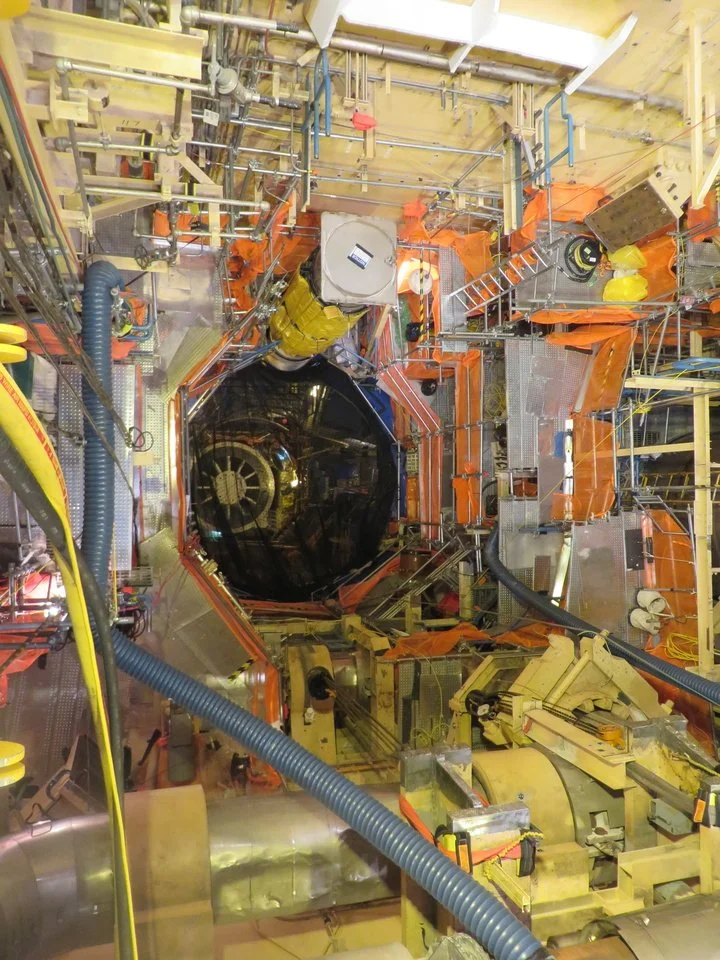
A roughly $4.2 billion federal loan will help upgrade Ohio’s two nuclear power plants, creating additional work for thousands of Ohio building trades members. Pictured is the Davis-Besse reactor pressure vessel closure head, which was replaced in 2002 by members of the building trades.
A federal loan of roughly $4.2billion will help upgrade Ohio’s two nuclear power plants, creating additional work for thousands of Ohio building trades members.
The U.S. Department of Energy announced on Oct. 5 that it would offer the loan to Vistra, the owner of the Davis-Besse Nuclear Power Station in Oak Harbor, and the Perry Nuclear Generating Station in Perry, along with the Beaver Valley plant in Shippingport, Pa.
The money will fund upgrades known as uprates — equipment improvements that squeeze more electricity out of existing reactors —across all three facilities.
According to the DOE, the work will add 433 megawatts of new nuclear capacity to the regional grid, preserve 4 gigawatts of existing baseload power and support roughly 3,000 engineering, construction and planned-outage jobs, along with thousands of other permanent positions.
For affiliated members of the Cleveland Building and Construction Trades Council and the Northwest Ohio Building and Construction Trades Council, the announcement means more opportunities to earn good wages and excellent fringe benefits.
“Perry Nuclear Power Plant is absolutely vital to Lake County, the Cleveland Building Trades and our local union,” said John Rusnak, IBEW Local 673 Business Manager. It is an economic anchor for Northeast Ohio, providing good-paying jobs, supporting local businesses and generating tax revenue that helps strengthen our communities.
“The plant also provides ongoing work for skilled union tradespeople who perform critical maintenance, refueling outages, equipment upgrades and other specialized work,” he added.
In Lake County, the home of the Perry plant, IBEW Local 673 supplies anywhere from 50 to over 100 electricians, working 2-12-hour shifts, 6 days a week, during routine outages. The spring 2027 refueling outage is estimated to need around 100-120electricians.
The announcement not only means those jobs will be saved, but additional jobs will be added to modernize the facility. The additional work will also benefit the surrounding communities.
“For our Local, investing in these plants means investing in our members, our families and our future. We need to continue advocating for the maintenance, modernization and skilled workforce these facilities require so that our members remain an essential part of Ohio’s energy future for decades to come,” Rusnak said.
The upgrade work is expected to stretch over several years. According to the Nuclear Regulatory Commission’s list of expected applications, Vistra plans to file an uprate request for Perry in the third quarter of 2029 and for Davis-Besse in the third quarter of 2032.
Applications for Beaver Valley’s two reactors are slated for 2030 and 2031. All four are listed as extended power uprates.
The federal loan provides a way to get more out of nuclear plants already on the grid, said Energy Secretary Chris Wright.
“By getting more power out of the nuclear plants we already have, we can deliver more affordable, reliable, around-the-clock energy for American families and businesses,” he said.
The investments will produce more electricity without requiring new transmission corridors or new generating resources and will support operations for an additional 20 years beyond the plants’ current licenses, according to the DOE announcement. Davis-Besse is currently licensed through 2037 and Perry through 2046. Vistra notified the NRC in January that it intends to file subsequent license renewal applications for all three of its sites in the coming years.
“Investing in these plants is incredibly important because these plants represent more than just clean and reliable electricity — they represent good-paying union jobs, long-term career opportunities, and economic stability for our communities,” said Rusnak. “Extending their operations means protecting thousands of jobs, creating opportunities for the next generation of skilled tradespeople and preserving the experience and expertise of the workforce that keeps these plants running safely and efficiently.”
The loan comes from the Doe’s Office of Energy Dominance Financing, formerly the Loan Programs Office. It is a conditional commitment, meaning Vistra must satisfy a series of technical, legal, environmental and financial conditions before the department finalizes the agreement and releases the money.
The package also includes an option to finance future uprates at Vistra’s Comanche Peak plant in Texas.
“These investments will extend the life of existing reactors, increase nuclear generation, and deliver abundant, around-the-clock power to lower costs and power American prosperity for decades to come,” said Gregory Beard, director of the DOE financing office.
The announcement will also benefit the Local’s organizing efforts and the Local 673 JATC apprenticeship recruitment efforts.
“With the growing labor movement, apprenticeship interest and applications have already been on the rise over the last few years, and this will help keep that momentum going,” Rusnak explained. “The planned investments signal a long-term commitment to Perry, which in turn also helps organizing efforts. A lot of non-union tradespeople have this stigma that union members are often laid off for long periods of time, and long-term projects like these help debunk that and can make the decision to join a union easier for some people.”
The loan was built on a deal announced in January, when Meta Platforms Inc., the parent company of Facebook, agreed to support upgrades at Perry, Davis-Besse and Beaver Valley as part of a push to power its data center operations with nuclear energy.
At the time, Meta stated it would be the largest set of uprates supported by a corporate customer. The 433megawatts of added capacity will continue to flow to the grid for all users in the 13-state PJM region, which includes Ohio and Pennsylvania.