
Building trades members battle brutal winter

Fifth-year IBEW Local 38 apprentice Joe Jackson is currently working on the Cleveland-Cliffs granulator project in Cleveland. Jackson and other building trades members working outside on the project dress in layers to stay warm in the cold.
Despite a January blast of arctic air and more than a foot of snow in many parts of Ohio, outside construction work carried on for numerous journeymen and apprentices.
In the wake of the massive storm that created havoc for a large swath of the U.S., much of Ohio has only recently started to recover from the piles of snow and freezing temperatures that dipped below zero in some areas.
For building trades members, the idea of a snow day may sound great, but it also means no paycheck for the day.
“That week (in January) the weather was brutal, but I have my wife and two kids who rely on me to earn a paycheck,” said Joe Jackson, IBEW Local 38 fifth-year apprentice. “They’re my motivation to show up each day.”
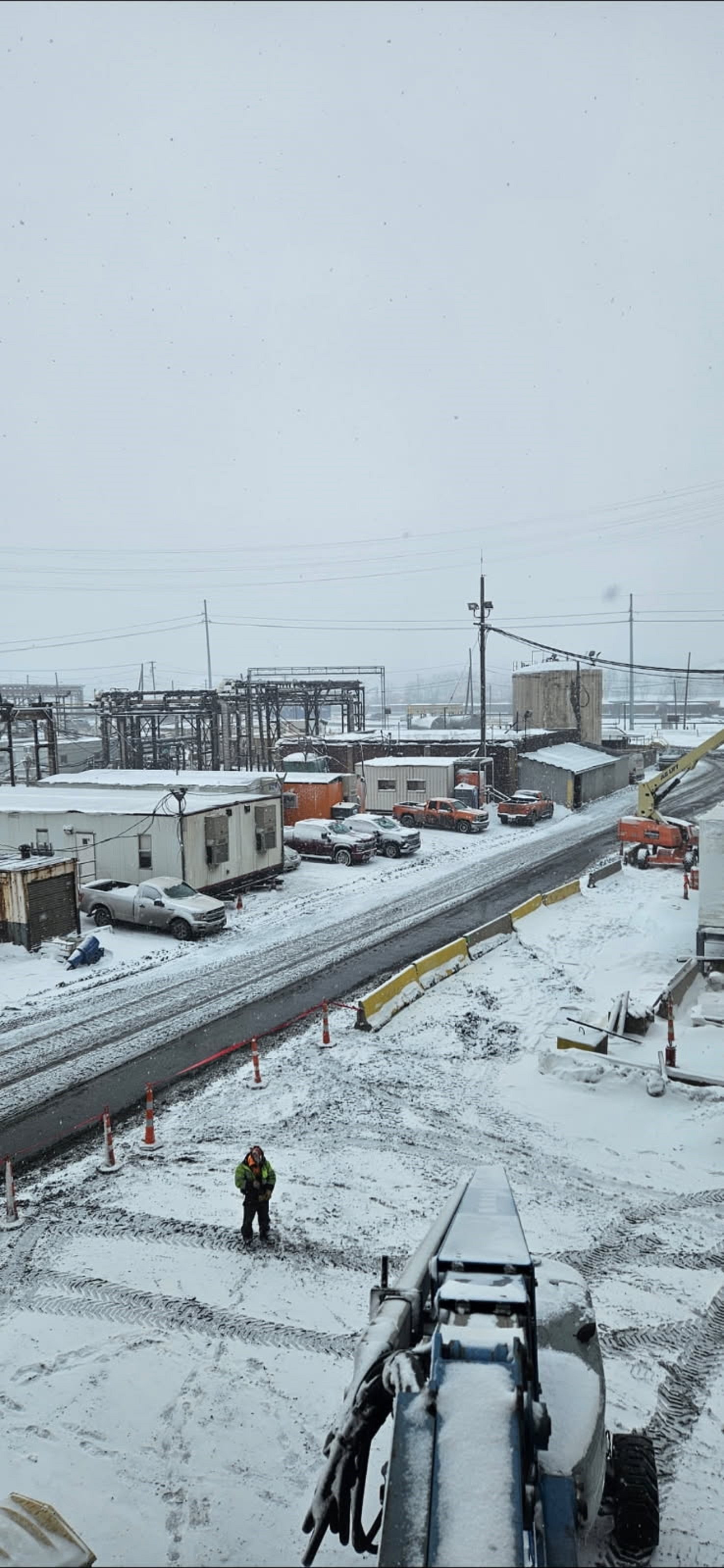
IBEW Local 38 Steward Tim Horval stands outside in the elements at the Cleveland-Cliffs Cleveland Works jobsite.
Jackson is part of a Lake Erie Electric crew, led by IBEW Local 38 steward Tim Horval, working on the Cleveland-Cliffs granulator project in Cleveland. Like many other tradesmen and tradeswomen around the state, they showed up each day prepared to work outdoors and battle the elements.
Over his 26 years in the field, Horval admitted he has worked in some pretty miserable weather conditions, including a few days in Southern Ohio, where the temperature dropped to -25 °C along the Ohio River.
The extreme temperatures – both heat and cold – are difficult.
“It sucks,” he said, of having to work on days like the late January arctic blast. “You go from sweating in the summer to freezing in the winter. At least when it’s cold, you can dress warmly. There’s not much you can do in the hot weather to get cool.”
When it comes to working in the frigid weather, Horval said building trades members must take precautions and work safely. On this project, building trades members rely on trucks to get around. And during periods of extreme cold, the trucks also double as warming stations.
“We work for about an hour in the cold and snow and then go to our trucks to get warm,” he explained.
Building trades members on this project can also go into the fab shop or break trailers to get warm.
Jackson stressed the need to keep moving in order to stay warm. “The heat is in the tools,” he said. “You need to keep moving and push through.”
Dressing appropriately is key to survival in these conditions. It is something journeymen stress to the apprentices.
“After doing it for so long, you get used to it,” Horval said. “We explain to them how to dress. I put on buckle (boots) over my work boots to keep my feet dry.”
Jackson recently started to bring back-up layers to better deal with the cold and wet feet.
“Pro tip,” he said, “bring extra clothes to stay dry and warm.” Besides the temperatures, snow and wind also affect those working outside. “It makes a difference when your vehicles are stuck in the parking lot and you have to walk through it and unbury things,” said Horval.
While still an apprentice, Jackson has already determined that working on a lift is easily one of the worst places to be when the wind chill factor drops into negative numbers.
“There are only so many layers you can put on,” he said. “Up in the air is one of the worst places to be in this weather. The wind makes it 100 times worse.”
Ice also poses problems.
“You can’t see it,” noted Jackson, “but we can melt it off things and put salt down on walkways to make them safer.”
Most importantly, though, building trades members must know the warning signs of frostbite and hypothermia.
Horval stressed the need for tradesmen and tradeswomen to look out for each other and to speak up if they think someone is showing signs of cold stress.
While journeymen are reminded about it, apprentices, especially those who have little experience working in severe cold, learn how to work and dress safely while in class at their JATC.
“Most of our instructors tell us about the unsafe conditions and how to handle them,” said Jackson about the weather instruction he receives at the Cleveland Electrical JATC. “Use hand warmers, toe warmers, dress in layers, but most of all, use common sense.
“You have to look out for your own safety. You have to tell someone when you can’t feel your fingers,” he added.